Raise a puppy who can handle the world.
The printable checklist our trainers use with puppies: track recovery, frustration, settling and independence, and work through the people, places, sounds and surfaces that matter.
- A weekly scorecard: is your puppy recovering faster, escalating less and settling better than last week?
- Seven confidence metrics, each with why it matters
- Exposure lists for people, dogs, animals, places, surfaces, sounds and strange objects
- Trackers, a daily routine and a weekly planner to keep you on it
30-day money back guarantee · Instant download · No account needed to buy
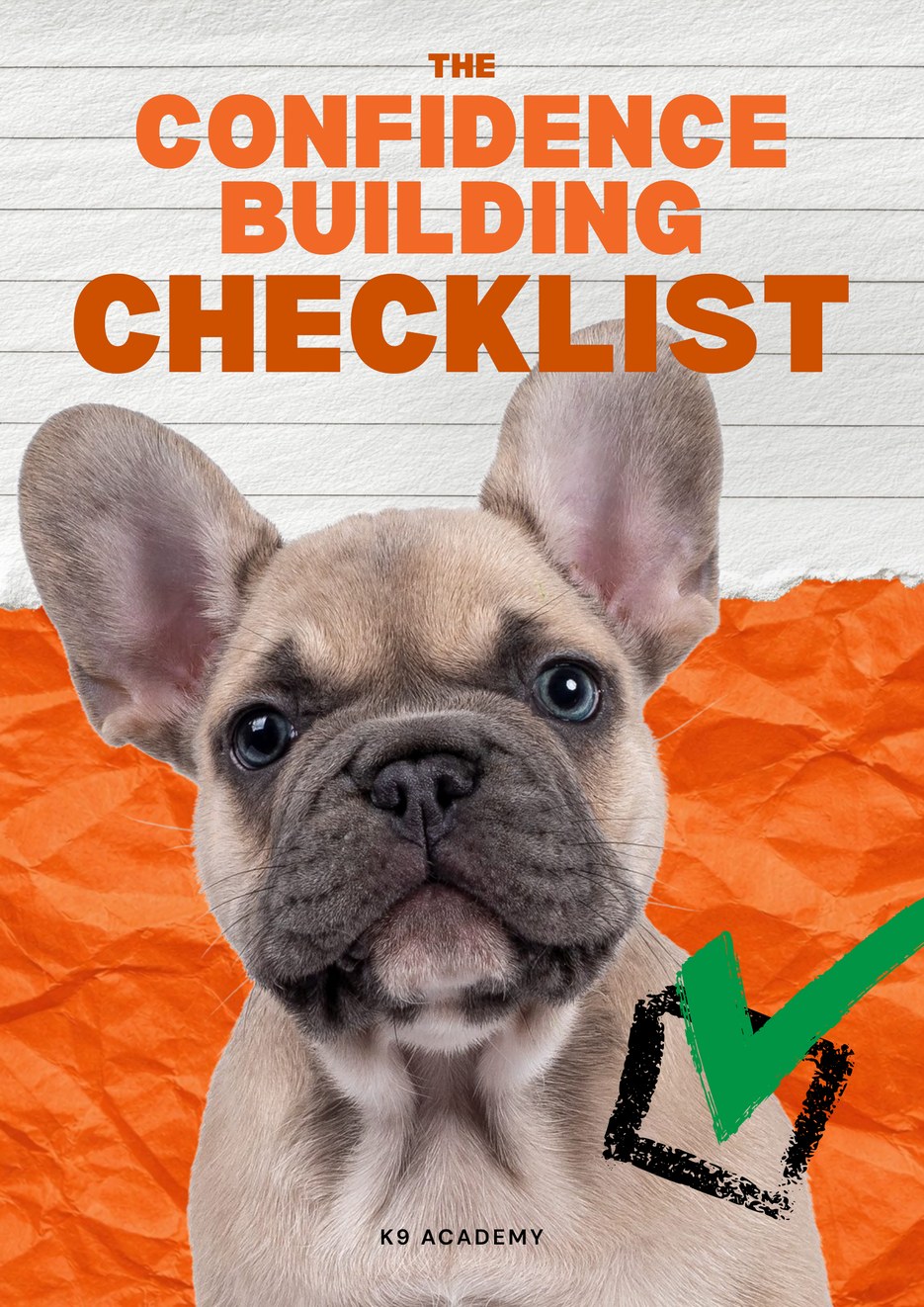
34 pages · 1.7 MB
Sound familiar?
Seeing it isn’t the same as handling it
“We’re trying to show her everything while she’s little.”
The checklist isn’t about how many places your puppy has been or how many dogs and people they’ve met. You tick a box by asking how your puppy handled it, not whether they saw it.
“He cries the moment I leave the room.”
Confidence includes emotional independence: resting without constant contact, coping with short absences, not shadowing you everywhere. The checklist tracks each one.
“She screams the second she can’t have something.”
Waiting for food, waiting at doors, being blocked from a greeting. Dogs who can’t tolerate frustration often become reactive, so it’s worth measuring early.
“Everyone says to comfort him when he’s scared.”
Constant reassurance, over-management and avoiding all stress are on the checklist’s list of confidence killers. Sheltering creates fragility.
How it works
Measure how your puppy handles the world
- 01
Change the question
You don’t tick a box because your puppy has seen something. You tick it by asking: how did my puppy handle this?
- 02
Score the seven metrics
Recovery speed, frustration tolerance, emotional regulation, settling, independence, adaptability and handler trust, each with why it matters.
- 03
Work through the world
People, dogs, animals, places, surfaces, sounds and strange objects, with a notes column for whether your puppy was confident, nervous or aloof.
- 04
Check in every week
Faster recovery, less escalation, better settling? That’s progress. If not, reduce the pressure and add more recovery.
Take a look inside
Made to print and fill in with a pen
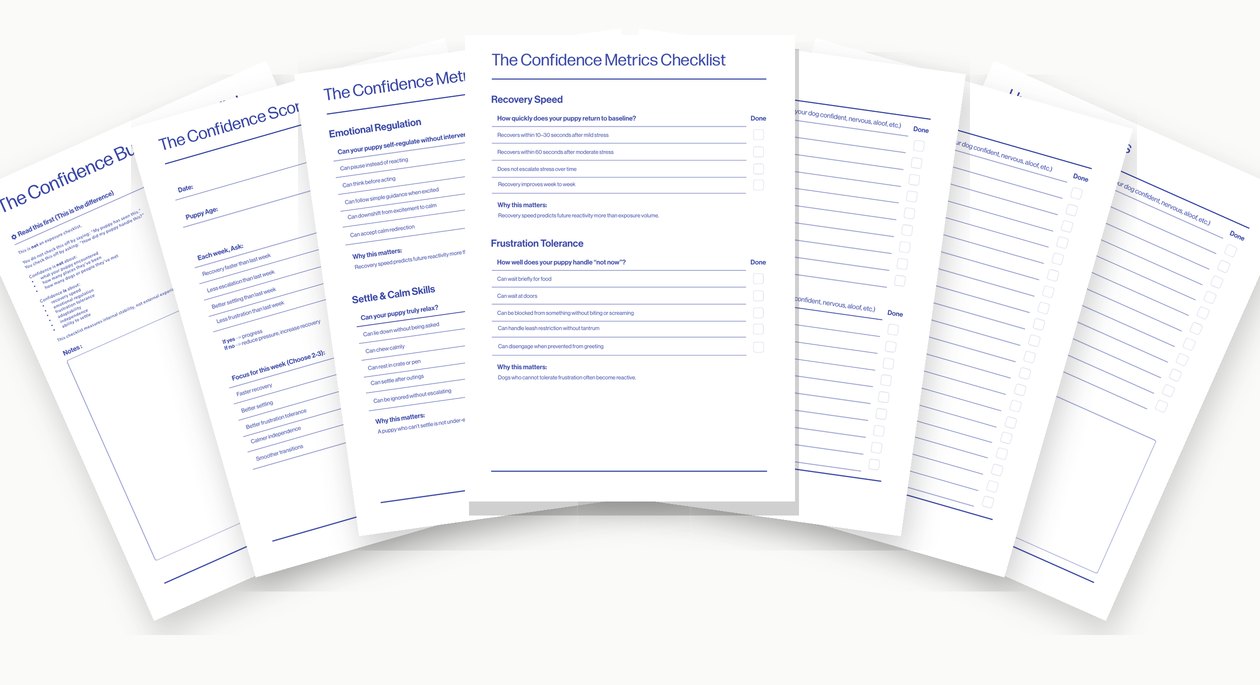
- Weekly scorecard
- 7 confidence metrics
- Confidence killers
- People, dog and place exposure
- Sounds and surfaces
- Trackers and weekly planner
Every week
Three kinds of days
Challenge
Mild pressure
Something new for your puppy to handle: a new place, a new sound, a new kind of person.
Consolidation
Repeat easy wins
Go back to what your puppy already handles well, so it becomes normal.
Recovery
Reset the nervous system
A quiet day. Most puppies fail because owners only do challenge days.
What’s inside
Everything in the checklist
- p. 2
Read this first
What a confident puppy does, what a puppy who lacks confidence does, and how to structure the week
- p. 3
The weekly confidence scorecard
Four questions to ask each week, and the two or three skills to focus on
- p. 4
The confidence metrics
Recovery speed, frustration tolerance, emotional regulation, settling, independence, adaptability and handler trust
- p. 7
Confidence killers
Constant reassurance, over-management, avoiding all stress, and flooding without recovery
- p. 9
People exposure
Types of people, how they move, what they wear, and people with strollers, wheelchairs and packages
- p. 12
Dogs and other animals
Dog types, behaviours, gear and locations, plus cats, squirrels, geese and more, no greeting required
- p. 15
Places, surfaces and sounds
City and nature, strange places, 20 surfaces, and sounds at home, in the weather and outside
- p. 20
Vehicles and strange objects
Cars, bikes, scooters, balloons, flags, inflatables and the body language of people around your puppy
- p. 22
Human and dog social skills
Greeting manners, neutrality, vet and groomer handling, neutral dog skills and structured play
- p. 26
Your own plan
A blank checklist, training brainstorming, an ideal daily routine, exposure trackers and a weekly planner
This is for you if…
- You’ve just brought a puppy home and want a full list of people, places, sounds and surfaces to work through
- Your puppy is nervous, clingy or quick to melt down, and you want to know what to work on first
- You want a way to tell whether your puppy is actually getting more confident, not just getting out more
- You like to print things out, tick boxes and write notes
It’s not for you if…
- Your dog is already grown. Get The Confidence Checklist instead: the same checklist, written for adult dogs.
- You want step-by-step lessons. This is a checklist and tracker: it tells you what to measure and what to work through, not how to teach each skill.
Who wrote it
Written by the trainers at K9 Academy
K9 Academy has trained dogs in Toronto since 2011, more than 10,000 of them in person. This is the checklist we use to judge whether a puppy is truly getting more confident, not just getting out more.
What owners say about their dogs’ confidence after working with us
These are reviews of K9 Academy’s training and daycare, where we build confidence the way this checklist measures it.
★★★★★
“Molly is a happier, social, and calmer dog because of the 1-1 training we have done with Anesh and Sophie!!”
“So many trainers before K9 Academy told us Molly would never socialize and was too anxious to be trusted! She is able to be around kids and play with other dogs.”
★★★★★
“His social skills with other dogs is unbelievable.”
“I'm never worried when we encounter new friends on walks.”
★★★★★
“My pup used to be reactive but now she's made many friends and has been less anxious around dogs!”
Everything you get
The Confidence Building Checklist
- The 34-page checklist (A4 PDF, made to print)
- The weekly confidence scorecard
- Seven confidence metrics, plus the confidence killers
- Exposure lists: people, dogs, animals, places, surfaces, sounds and objects
- Human and dog social skills checklists
- Brainstorming pages, a daily routine, exposure trackers and a weekly planner
- Instant PDF download, yours to keep
One private lesson with a trainer costs $225 or more.
The checklist:$9
One payment · instant download

Want to see it done? Take the video course
Puppy Program
Everything you need for a puppy that grows into a well-behaved adult — from potty training to socialization to bite inhibition.
- 13 modules on video
- The Confidence Building Checklist comes with it, plus 6 more downloads
- Watch at your own pace, on any device
Questions
Frequently asked questions
How is it different from The Confidence Checklist?
It's the same checklist, with the same pages and items. This edition is written for puppies; The Confidence Checklist is written for adult dogs. You only need one.
Is this a physical book?
No. It's a 34-page PDF you download straight after checkout. It's made to print, so you can tick boxes and write notes with a pen.
How do I use it?
Start with the scorecard and the metrics. Then work through the exposure lists, ticking a box only when your puppy handled it well, and noting how they did. Each week, check whether your puppy is recovering faster. If not, reduce the pressure and add recovery.
Can I print the trackers more than once?
Yes. It's yours to keep, so print the scorecard, trackers and weekly planner as often as you need them.
What if it doesn't help?
You're covered by our 30-day money back guarantee. Email info@k9academy.ca for a full refund.
Build a confident puppy, week by week
Download The Confidence Building Checklist, print the scorecard, and score your puppy this week.
30-day money back guarantee · Instant download
The Confidence Building Checklist
$9 · instant download