Understand your reactive dog. Then change the behaviour.
K9 Academy's behaviour modification guide: why dogs become reactive, what they're thinking when they react, and the house rules, walk structure, exposure and socialization that change it.
- The reactivity spectrum, from excitement to aggression, and what's driving your dog
- What your dog is thinking in a fearful, territorial or frustrated state of mind
- House rules, walk rules, and the levels of pressure to work through
- How to socialize a reactive dog with people and other dogs, step by step
30-day money back guarantee · Instant download · No account needed to buy
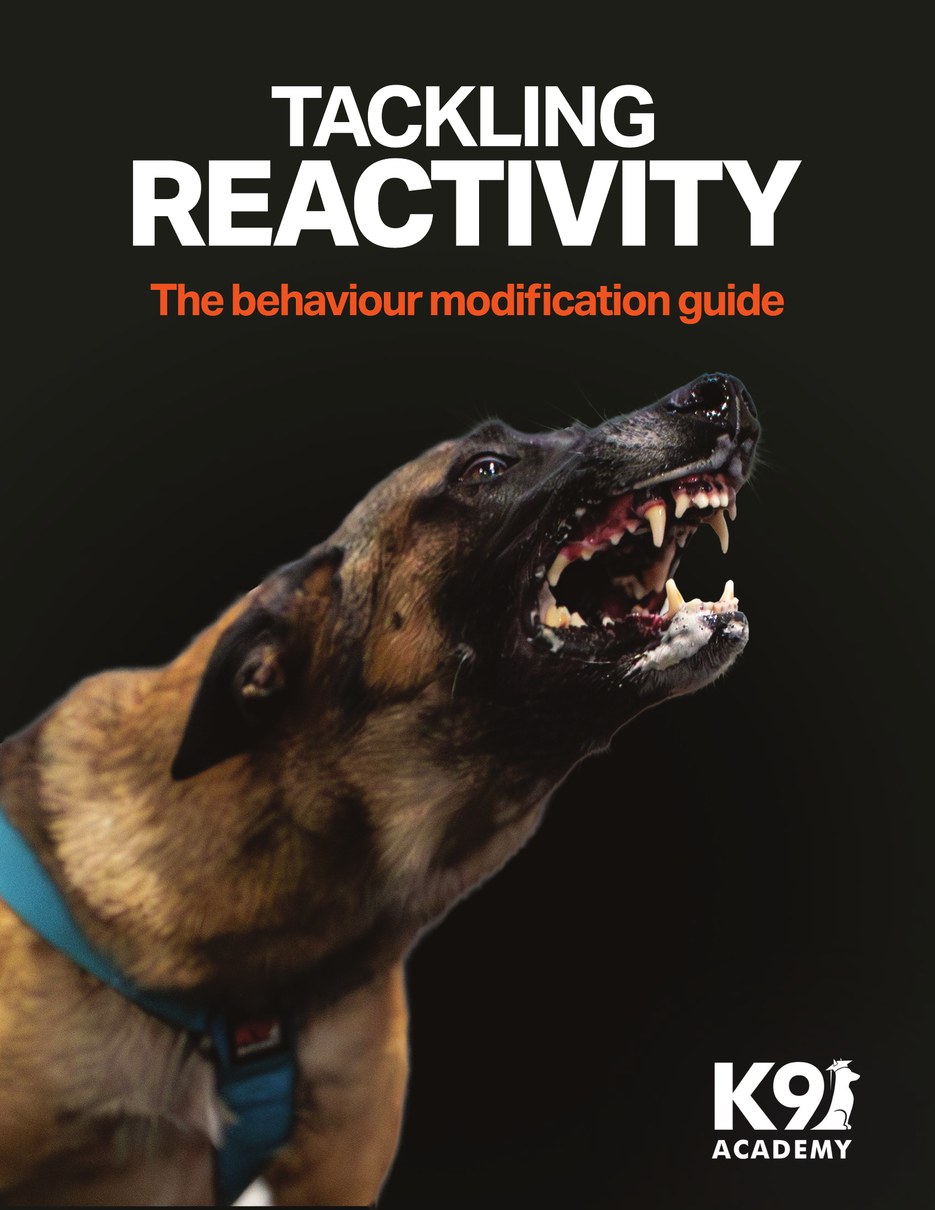
52 pages · 12 MB
Sound familiar?
Two reactive dogs can look the same for completely different reasons
“He was a sweet puppy. Where did this come from?”
Often not from a bad experience at all. Genetics play a big role: protection, hunting and herding breeds carry instincts that can show up as reactivity on a leash.
“She just wants to say hi. Why does she lose it?”
Daily dog park trips can teach a dog that other dogs are their only source of fun. On leash, that becomes frustration. You need to be their number one source of fun.
“He barks at everything out the window.”
Reactive behaviour starts in the home. The book’s five house rules begin with no barking and no fixating out a window or door.
“I’ve said “no” a hundred times and nothing changes.”
A fair correction needs four things: the right intensity, timing within seconds, 100% consistency, and a clear alternative. The book covers each, and the ones that don’t work.
How it works
Define it, understand it, prevent it, tackle it
- 01
Define it
The reactivity spectrum from excitement to aggression, and the causes: genetics, over-socialization, frustration and past trauma.
- 02
Understand it
What your dog is thinking when fearful, territorial or frustrated, and why the mindset matters more than the reaction.
- 03
Prevent it
House rules, the crate, structure and a predictable schedule, then preparing for and running a structured walk.
- 04
Tackle it
Exposure, stress tolerance and levels of pressure, fair punishment, difficult situations, and socializing with people and dogs.
Take a look inside
Real photos, real explanations
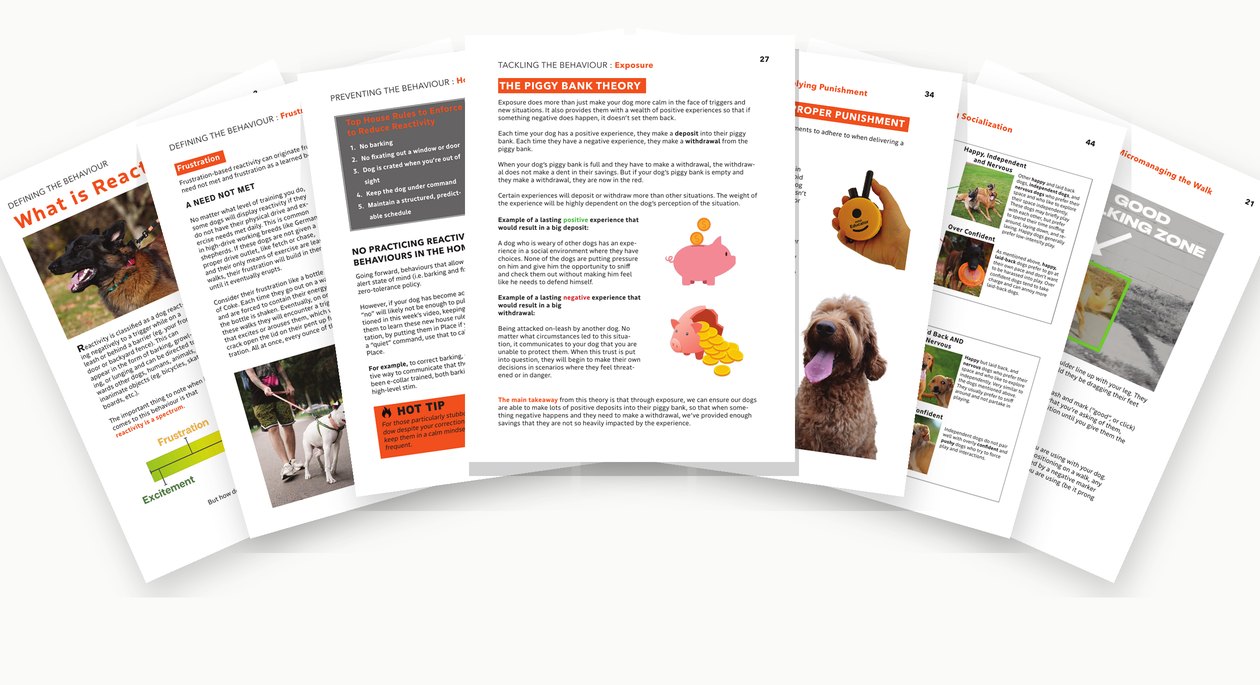
- The reactivity spectrum
- States of mind
- Five house rules
- The piggy bank theory
- Levels of pressure
- Socialization formula
Understanding the behaviour
What your dog is thinking when they react
Fearful
“I’m in danger”
The fear may not be rational, but it triggers fight or flight. Instead of reacting, the dog learns neutrality, or to check in with you for guidance.
Territorial
“Go away”
The dog is protecting a resource: space, or you. The fix starts with you becoming a leader, not something to guard.
Frustrated
“I need an outlet”
The walk is their only release, so they scan for something to chase. A real drive outlet, like a flirt pole or fetch, takes the pressure off.
Over-excited
“I have to get to them”
Dogs who see other dogs as their only fun pull, then bark when they can’t reach them. You need to become the source of fun.
What’s inside
Everything in the book
- p. 1
Foreword
Head trainer Anesh Srikrishnakumar on Eloise, a trail full of bikes, and the dog fight that showed him how much genetics matter
- p. 3
Defining the behaviour
The reactivity spectrum, and the causes: genetics, over-socialization, frustration and past trauma
- p. 9
Understanding the behaviour
Fearful, territorial and frustrated states of mind, and why mindset matters more than the reaction
- p. 13
House rules
Five house rules, crate training, structure, and a predictable schedule
- p. 18
The walk
Preparing to leave, the rules of heel, positioning, rewarding, and the behaviours to watch
- p. 24
Exposure
What to expose your dog to, three common scenarios, and the piggy bank theory
- p. 28
Stress tolerance
Working below threshold, levels of pressure for dogs, prey and bikes, handling, and building confidence
- p. 33
Applying punishment
The four characteristics of a fair punishment, and the punishments that don’t work
- p. 36
Difficult situations
Five common situations, from a reaction in an elevator to an off-leash dog rushing you
- p. 38
Socializing with people
Teaching “go say hi”, building neutrality, and 11 escalating levels of human pressure
- p. 42
Socializing with other dogs
Play styles, compatible personality types, the socialization formula, and flooding
This is for you if…
- Your dog barks, lunges or growls at dogs, people, bikes or the window
- You want to understand why your dog reacts, not just what to do
- You’re ready to set rules at home as well as on walks
- You’re willing to use fair corrections alongside rewards
It’s not for you if…
- You only want reward-based training. The book uses corrections, including with a prong collar or e-collar, and explains how to make them fair.
- Your dog has bitten a person or another dog. Work with a trainer first; we offer a free phone assessment at 437-778-5273.
Who wrote it
From K9 Academy’s head trainer
The foreword is by Anesh Srikrishnakumar, K9 Academy’s head trainer, who first worked with a reactive dog in 2010. K9 Academy has trained dogs in Toronto since 2011, more than 10,000 of them in person, and this is the guide behind its reactivity work.
What owners say about our reactivity training
These are reviews of K9 Academy’s reactivity training.
★★★★★
“We can't thank or recommend K9 Academy enough.”
“It's because of these folks that we have essentially been gifted a new dog. Our reactive, anxious rescue is now calm, confident, and a joy to walk. The transformation was beyond what we thought possible.”
 Andrew M.Rescue Mix owner · Mississauga, ON
★★★★★
“I'd give 6 stars if I could!”
“We honestly can't believe Simba is the same dog. The reactivity is gone. He walks past other dogs like they don't exist. If you're on the fence — just do it. We wasted months trying other things first.”
 Hugh M.Golden Retriever owner · Toronto, ON
★★★★★
“What a difference! I feel like a dream came true.”
“My dog's obedience is 100% better. The structured approach made all the difference — I finally understood WHY my dog was reactive and exactly what to do about it. Can't recommend enough.”
 S. IndrawesShepherd Mix owner · Brampton, ON
Everything you get
Tackling Reactivity
- The 52-page book (US Letter PDF)
- Foreword by head trainer Anesh Srikrishnakumar
- The causes of reactivity and your dog’s state of mind
- House rules and the rules of the walk
- Levels of pressure for dogs, prey, bikes and people
- Socializing a reactive dog with people and other dogs
- Instant PDF download, yours to keep
One private lesson with a trainer costs $225 or more.
The book:$21
One payment · instant download
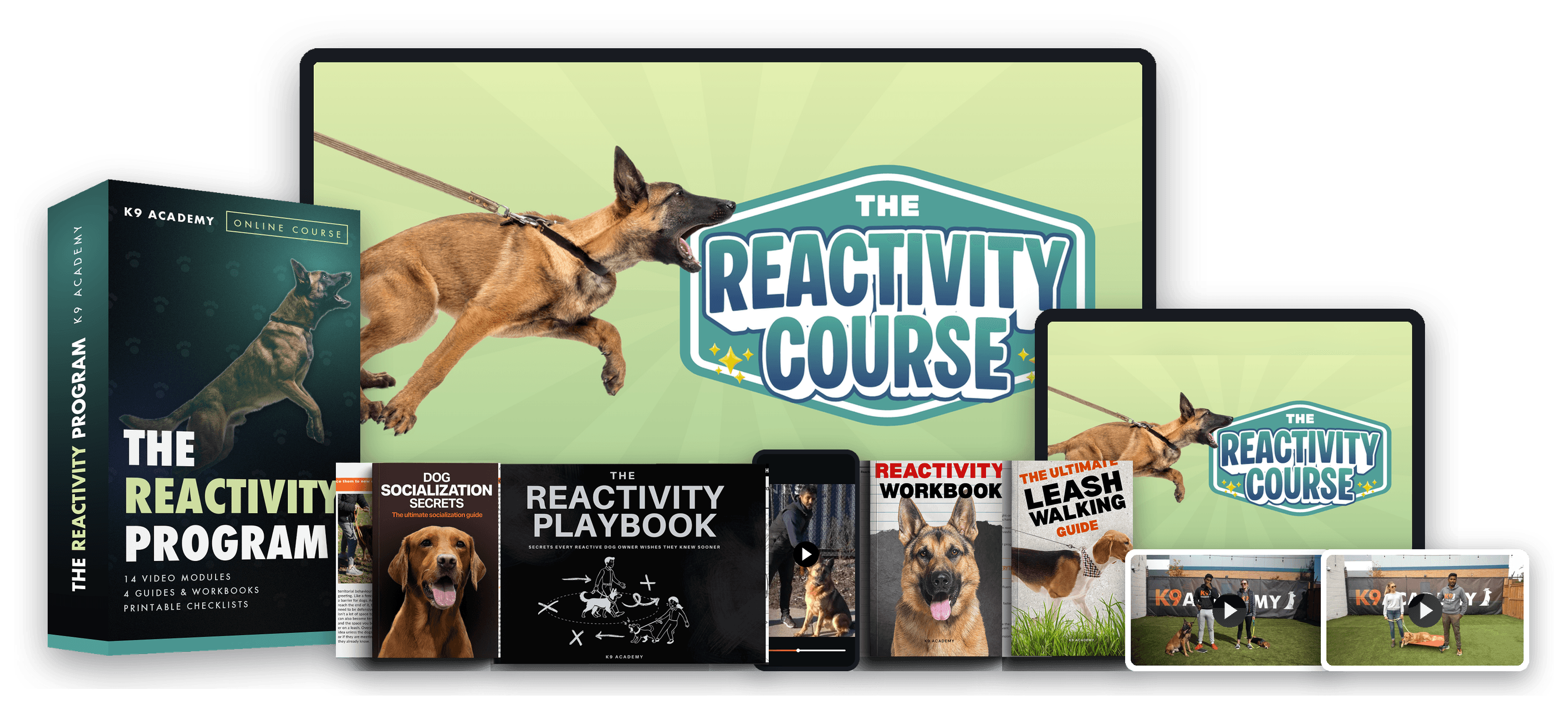
Want to see it done? Take the video course
The Reactivity Program
Stop the barking, lunging and losing it on leash — with a protocol that holds up in public, not just in your living room.
- 14 lessons on video
- Tackling Reactivity comes with it, plus 7 more downloads
- Watch at your own pace, on any device
Questions
Frequently asked questions
Is this a physical book?
No. It's a 52-page PDF you download straight after checkout, to read on your phone, tablet or computer.
Does it use corrections?
Yes. The book explains the four things a fair correction needs (intensity, timing, consistency and a clear alternative) and why spray bottles, shaker cans and a “no” with no follow-through don't work.
The book mentions videos. Are they included?
No. Tackling Reactivity was first written to go with our online reactivity course, so it mentions “this week's video” in a couple of places. The book stands on its own; the videos are part of The Reactivity Course.
How is it different from The Reactivity Playbook?
This book explains why reactivity happens and the principles that change it. The playbook is the quick reference: what to do in 27 everyday situations, step by step, in pictures.
What if it doesn't help?
You're covered by our 30-day money back guarantee. Email info@k9academy.ca for a full refund.
Get to the other side
Download Tackling Reactivity, find your dog on the reactivity spectrum, and start with the house rules.
30-day money back guarantee · Instant download
Tackling Reactivity
$21 · instant download